From a 45-Second Jog to a Complete Turnaround
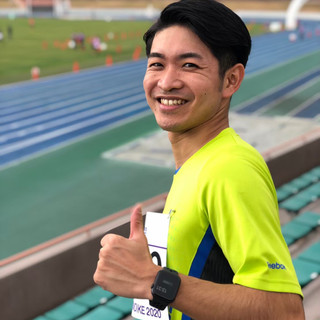
Have you ever had an important race coming up...
and suddenly started feeling pain in your foot or leg?
You've spent months preparing.
You've forced yourself out of bed early.
You've somehow found time to train while balancing work, family, and everything else life throws at you.
And finally, your goal race is getting close.
Then suddenly...
something starts to feel wrong.
A little discomfort turns into pain.
And you think:
Why now?
Of all possible times...
Why now?
Maybe you've experienced something like this yourself.
Or maybe just imagining it is enough to make you nervous.
Disaster can happen without warning.
A few months ago, I experienced exactly that.
The Sound I Never Wanted to Hear
It was a Sunday afternoon.
There were only two weeks left until the Kobe Marathon—a race I had spent five months preparing for.
As usual, I had traveled to Shiga Prefecture to coach a group of junior high school athletes.
That day, I was demonstrating and teaching agility drills using an agility ladder.
Everything was normal.
Until the very last drill.
It happened on the final step of a jumping movement.
CRACK.
It was the kind of sound your entire body immediately rejects.

A sound that makes you think:
Please tell me that didn't just happen.
But it had.
I had badly twisted my foot during the agility drill.
The Despair of a 45-Second Jog
The next day, I had planned to run 30 kilometers.
It was going to be one final marathon-specific long run before Kobe.
But when I woke up that morning...
the pain was severe.
It hurt just to stand.
Still, I thought:
Maybe I can run.
So I put on my running shoes and headed outside.
I started jogging.
And then...
I stopped.
I was limping.
The pain was too much.
My run lasted exactly 45 seconds.

Forty-five seconds.
That's all I could manage.
And suddenly, a hundred thoughts started running through my head.
Why did I do that agility drill?
Why did I lose focus on the final repetition?
There are less than two weeks until Kobe.
I can't even jog for 45 seconds...
Am I really going to be ready?
I went home and took off my socks.
My foot was swollen.
Badly.
There was significant bruising too.
Honestly, it looked like someone had replaced my foot with an elephant's foot.
Walking hurt.
Going down the stairs was even worse.
At that point, I started thinking something I didn't want to admit.
Maybe Kobe isn't going to happen.
The next day, I went to a sports orthopedic clinic and had an X-ray.
Then the doctor told me:
"You should rest for at least a month. Your race in December might be difficult too."
In other words...
Forget Kobe.
Forget the races after that.
Forget the rest of the year.
I wasn't ready to give up.
But when a doctor tells you something like that, it carries weight.
To make things even more dramatic, I ended up wearing a brace, and I was told that if the pain became severe, I might need crutches.
At that point...
even I started thinking:
Maybe this really is over.
But Then I Woke Up the Next Morning...
Something strange happened.
The day after visiting the orthopedic clinic, I woke up and noticed that the swelling had already gone down.
More surprisingly...
most of the pain had disappeared.
I thought to myself:
If I'm going to lose the race anyway, I might as well fight until the very end.
So, with nothing to lose, I went outside and started running carefully.
And somehow...
the pain barely bothered me.
I kept going.
And eventually, I completed a 25-kilometer run at faster than 3:40 per kilometer.
A few days later, I was also scheduled to run a 5,000-meter race as my final speed session before Kobe.
During that 25-kilometer run, I even ran the final kilometer in 3:05.
And afterward?
The pain didn't come back.
For the first time, I started thinking:
Maybe I can still make it.
Hope returned.
I decided to give myself a chance.
The pain never returned.
That Saturday, I raced the 5,000 meters as planned and ran a personal best for an officially recognized race as a working adult:
15:34.
Just days earlier, I couldn't jog for more than 45 seconds.
Now, I was running again.
Training was back on track.
And my goal of breaking 2:30 in the marathon was still alive.
How Did I Recover From a 45-Second Jog?
Looking back, you might wonder:
Maybe the injury wasn't actually that serious.
And honestly, that's a fair question.
But the sound I heard when I twisted my foot was real.
The pain that made it difficult to walk the next day was real.
The junior high school athletes standing nearby heard the sound too.
So how did the pain improve so dramatically in such a short period of time?
The answer is simple.
I tried everything I could think of.
I went into full survival mode.
Because when you're about to lose something you've spent five months preparing for...
you become surprisingly motivated.
I'm convinced that if I had simply accepted the situation, done nothing, and waited around...
I might still have been unable to run.
Instead, I tried several different forms of self-care.
And somehow, within just a few days, the pain was almost completely gone.
Here are the four things I did:
Icing
Self-massage
Hot spring therapy
The Third Ikegami Machine
1. Icing
The first thing I did was simple.
I filled an ice pack with ice and cooled the injured area repeatedly.
Pain and swelling are often associated with an inflammatory response, and when the area felt warm to the touch, I used icing as part of my self-care.
I basically spent the next few days doing whatever I could to manage the situation.
2. Self-Massage
The second thing I tried was self-massage.
I even worked on areas that didn't seem directly related to the injury.
My thinking was simple.
Maybe reducing unnecessary muscular tension could help relieve stress around the area.
Maybe it could help me move more comfortably.
At that point, I wasn't taking anything for granted.
I was trying everything.
3. Hot Spring Therapy
The third thing I did was visit a local hot spring.
I looked into the water and its advertised benefits and decided to give it a try.
I was basically willing to grab onto anything that might help.
So during that one week...
I went to the hot spring three times.
Again:
Desperate times.
Desperate measures.
4. The Third Ikegami Machine
But out of everything I tried...
there was one thing that stood out to me the most.
Without question:
The Third Ikegami Machine.
And there's another reason I kept using it.
It's incredibly easy.
You turn it on.
You position the light.
And that's it.
Compared with icing, massage, or driving somewhere to use a hot spring...
it required almost no effort.
So, honestly...
I found myself using it constantly.
And this wasn't the first time it had helped me through a difficult situation.
I've used previous versions of the Ikegami Machine for:
Managing chronic discomfort from running
Supporting recovery when fatigue wasn't going away
Preparing for important races
And this time, I used it after suddenly twisting my foot.
For me, it became another tool I could use when my body wasn't cooperating with my training schedule.
What Is the Third Ikegami Machine?

The Third Ikegami Machine is a light-emitting device developed by Well-Being.
The idea is simple:
It uses multiple wavelengths of light designed to reach tissues at different depths.
The device combines:
650 nm
850 nm
950 nm
light wavelengths.
Different tissues in the human body exist at different depths.
So rather than focusing on only one level, the Third Ikegami Machine was designed to deliver multiple wavelengths that can interact with tissues at different depths.
It also uses an LED-based design together with a concave lens system intended to increase the intensity of the light while maintaining a relatively broad treatment area.
That combination is one of the things I personally like about the design.
A wider treatment area can be useful.
But simply spreading the light over a larger area can reduce the amount of energy delivered per unit area.
The design of the Third Ikegami Machine attempts to balance those two factors.
Why I Keep Using It
At this point, I own three different generations of the machine:
A prototype of the Third Ikegami Machine
The previous Second Ikegami Machine
The original Ikegami Machine
And honestly...
I've even thought about buying another one.
Why?
Because for me, having a recovery tool available at home has become incredibly valuable.
As a runner, there are always things happening.
Your legs feel heavy.
Something feels tight.
A small area starts bothering you.
Or you simply want to support your recovery after a difficult training session.
Distance running and marathon training involve thousands and thousands of impacts with the ground.
And injuries are unfortunately part of the sport.
That's why I believe having a tool you can use at home can provide real peace of mind.
Personally, these are the three biggest benefits I look for:
Supporting recovery after hard training
Helping me stay consistent with my training
Providing another option when discomfort or fatigue appears
And for runners who train seriously...
consistency is everything.
The Price
The Third Ikegami Machine is priced at:
$1,200
I'll be honest.
$1,200 is not a small purchase.
And I'm not going to pretend that it is.
But for serious runners...
the question isn't always:
"Is this cheap?"
Sometimes, the better question is:
"Is this something I'll actually use?"
For me, that's where the value is.
This isn't something you use once and forget about.
It's a tool you can keep at home and use as part of your regular recovery routine.
After a hard workout.
When your legs feel unusually heavy.
When something starts feeling tight.
Or when you're preparing for an important race.
And unlike paying for a single treatment...
you have access to it whenever you need it.
That's one of the reasons I continue to use mine.
A Limited Number of Units
The Third Ikegami Machine is individually assembled in Japan.
Because of that, production is limited.
Each batch is produced in relatively small quantities, and availability can be limited.
For the next release...
only 25 units will be available.
This isn't artificial scarcity.
The machines are produced individually by skilled craftspeople in Japan.
And production simply takes time.
As a result, there may be periods when the Third Ikegami Machine is out of stock.
When a new batch becomes available, the units can sell out quickly.
And once they're gone...
it may take several weeks before the next batch becomes available.
So if you visit the product page and see:
"Add to Cart"
that means the machine is currently available.
If you're interested...
don't wait too long.
And if it's currently out of stock, make sure to request a restock notification.
That way, you'll be notified when the next batch becomes available.
What About Paying in Installments?
If you'd like to get the Third Ikegami Machine but prefer not to pay the full $1,200 at once...
installment payment options may be available.
Depending on your location and the payment provider, you may be able to split the cost into several payments.
Please check the payment options available at checkout for the most up-to-date details.
Ready to Learn More?
If you're serious about your training...
and you want a recovery tool you can keep at home and use whenever you need it...
you can learn more about the Third Ikegami Machine below.
If the machine is currently available, you'll be able to order directly.
And if it's out of stock...
make sure to request a restock notification.
That way, you'll be the first to know when the next batch becomes available.
What Other Users Have Told Us
Of course, my own experience is only one experience.
So I also want to share some of the feedback we've received from people who have used the Third Ikegami Machine.
These are their personal experiences and opinions.
"I Can't Believe I Lived With This for 20 Years"
"I bought the Third Ikegami Machine because I had persistent shoulder pain that I simply couldn't get rid of.The pain started around 20 years ago, back when I was in high school.I had tried hospitals, manual therapy, and pretty much everything I could think of, but the problem never completely disappeared.Eventually, it suddenly became worse.At one point, I couldn't even raise my arm high enough to tie my hair.When I ran, my shoulder would hurt after around 10 kilometers, and I couldn't swing my arm properly.I also practice Kyudo, Japanese archery, but the pain made it difficult to draw the bow correctly.At first, I wasn't sure whether light could really make a difference.But after reading the information and feeling that it made sense to me, I decided to give it a try.During the first week, I didn't notice much change.I kept using it while getting ready in the morning, stretching, and relaxing at night.Then, after about two weeks, I suddenly realized that tying my hair no longer hurt.I could draw my bow properly again.My accuracy started coming back.I could run 20 kilometers without problems.I was eventually able to complete a 30-kilometer run again.It took about a month.After living with the problem for 20 years, it almost felt unbelievable.Since then, I've continued using it as part of my routine.Honestly, I don't like traveling without it anymore."
— Watanabe
"Maybe It's More Useful for People Like Me"
"At first, I thought a device like this was something only high-level runners—people chasing sub-3 marathons or elite performances—would use.But after using it myself, I changed my mind.Maybe it's actually even more useful for someone like me.I'm not someone with an especially durable body.But when I feel fresher, I'm able to train more consistently.I'm also less likely to let fatigue change the way I move."
— Watanabe
"I Can't Imagine Being Without It"
"I regularly visit a sports clinic and work with both a physical therapist and an athletic trainer.After buying the Ikegami Machine, I went back for another session.The physical therapist told me that some of the muscular tightness had improved.I had been skeptical before purchasing it.But after using it myself, I honestly don't want to be without it."
— Hideyuki Fujiwara
"The Discomfort I'd Had for Six Months Was Almost Gone"
"The machine arrived yesterday, and I used it right away.When I woke up the next morning, the discomfort I'd been experiencing in my knee and the numbness on the top of my foot for around six months felt significantly better.At first, I was skeptical.But I was genuinely surprised."
— Takahashi (pseudonym)Purchased a total of three units
"The Peace of Mind Is Different"
"My Ikegami Machine finally arrived.That day happened to be my main high-intensity training day, so I used it before training and again that night.Honestly, I was surprised.Even if some of it is psychological... I don't really care. It feels great. [Laughs]By the next morning, I felt much better than I expected after a hard workout.Areas that usually become tight when fatigue builds up also felt better.Having it available simply gives me a different level of confidence.I just have to be careful not to feel so good that I start training too hard."
— Tanaka
"My Sleep Data Changed Too"
"I've been using the Ikegami Machine for about a month.One thing I noticed was a change in the sleep data recorded by my COROS running watch.Of course, I understand that a running watch doesn't directly measure brain waves, so I can't say how accurate the data is.But on days when I didn't use the machine before bed, my watch often showed deep sleep at around 10%.On days when I used it before bed, the number sometimes increased to around 20–30%.Subjectively, I also feel like I wake up feeling more refreshed.And when my legs or lower back feel particularly heavy after training, using the device seems to help me feel better the next day.I'll continue using it and see what else I notice."
— Sasaki
Frequently Asked Questions
1. What happens after the one-year warranty?
We provide a one-year warranty for repairs or replacement after purchase.
After the first year, we also try to support repairs whenever possible.
However, please understand that, like any electrical product, components will eventually wear out.
The LEDs themselves are designed for a long operating life.
Other internal electrical components may reach the end of their usable life first.
Depending on use, those components can potentially be replaced.
As a rough example:
If you use the device for two hours per day, that's approximately 730 hours per year.
At 10,000 hours of use, that would equal roughly 13 years.
Of course, actual lifespan depends on usage and conditions.
2. How often does the machine break?
Failures have been relatively rare.
However, because this is an electrical product, we cannot guarantee that a problem will never occur.
Some examples of potential issues include:
Connection problems with the power cable
A lens becoming detached from the light source
If you experience a problem, please contact us.
3. Will production increase in the future?
Each machine is assembled individually in Japan.
Production is ongoing, but demand has sometimes exceeded the number of units we can produce.
We plan to continue producing additional units.
However, we cannot always provide an exact date for the next restock.
When the next batch is scheduled, we'll announce it.
Ready to Learn More?
If you're serious about your training...
and you want a recovery tool you can keep at home and use whenever you need it...
you can learn more about the Third Ikegami Machine below.
If the machine is currently available, you'll be able to order directly.
And if it's out of stock...
make sure to request a restock notification.
That way, you'll be the first to know when the next batch becomes available.
One Final Thought
I want to be clear about something.
The Third Ikegami Machine isn't a replacement for proper medical care.
If you're dealing with a serious injury or unexplained pain, you should always seek appropriate professional advice.
But as a runner...
I know what it's like to have an important race approaching.
I know what it's like to feel something go wrong and immediately start calculating:
How many days until the race?
Will I be able to train?
Am I going to lose everything I've worked for?
That's exactly why I've become such a fan of having recovery tools available at home.
Because you never know when you'll need them.
Two weeks before the Kobe Marathon...
I couldn't jog for more than 45 seconds.
A few days later...
I was running 25 kilometers.
Then I ran 15:34 for 5,000 meters.
And I was back in the fight.
Was the Third Ikegami Machine the only reason?
Of course, I can't say that.
I used multiple forms of self-care, and recovery is influenced by many factors.
But it was one of the tools I used most consistently throughout that period.
And that's why I continue to use it today.
Because in distance running...
the biggest goal isn't to have one perfect workout.
It's to stay healthy enough to keep training.
And sometimes...
the ability to keep training is the most valuable performance advantage of all.
ー TEX


Comments